From IBS to Today: What 1,000 Industry Conversations Told Us About 2026
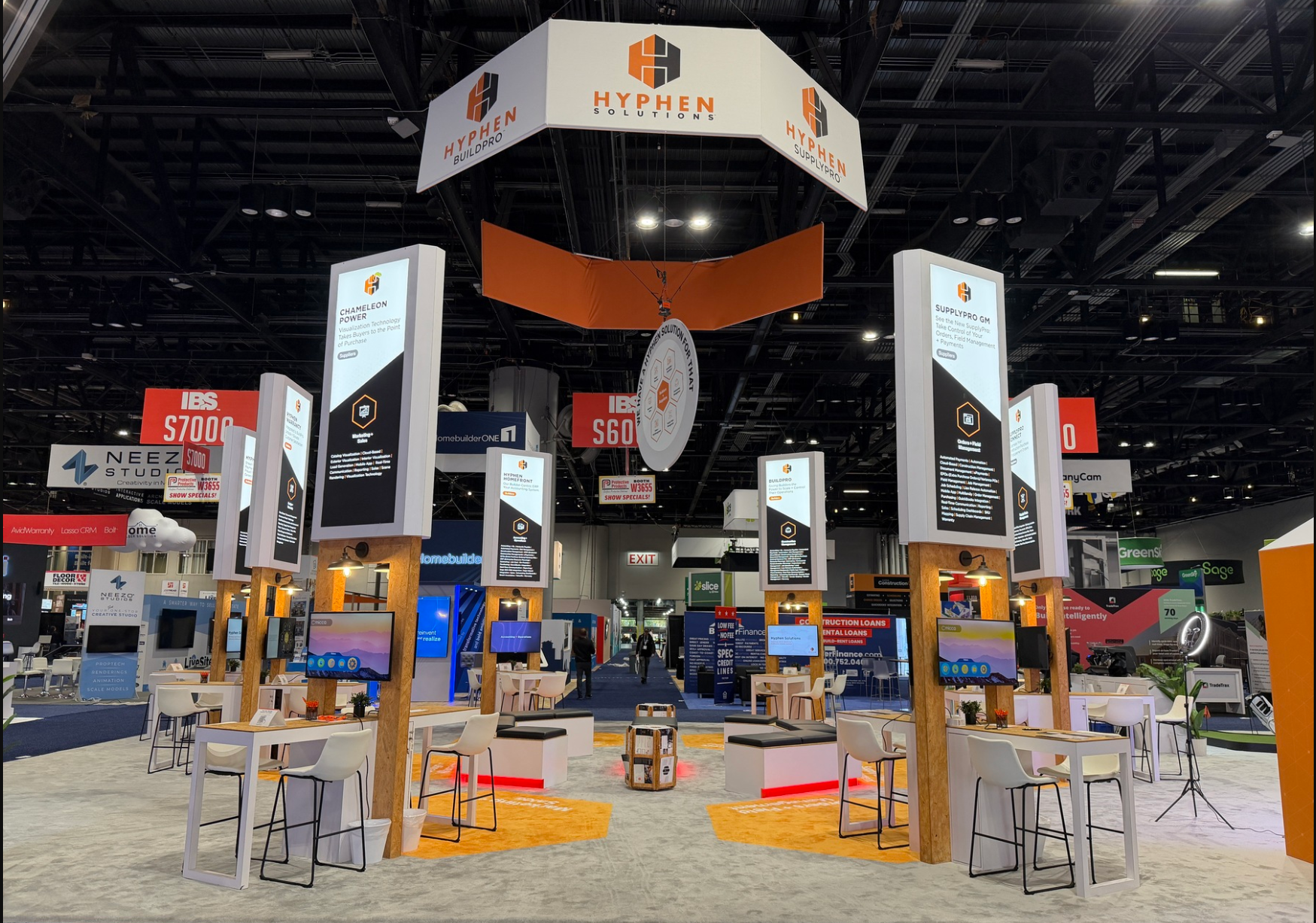
At the International Builders’ Show earlier this year, our team had more than 1,000 conversations with Builders, Suppliers and other residential construction professionals.
We came home with pages of notes, but a handful of themes kept rising to the top. Builders were asking harder questions about return on investment. Suppliers wanted simpler ways to work across their Builder relationships. Both were looking for greater efficiency, better-connected systems and software that could solve real operational problems.
At the time, we shared those observations in What We Learned from 1,000 Builder and Supplier Conversations at IBS 2026.
Now, as we move through the final months of 2026, it is worth checking back in.
According to the National Association of Home Builders (NAHB), single-family housing starts increased 7.6% in August to a seasonally adjusted annual rate of 918,000 units. Year to date, however, single-family production remained 4.7% lower than the comparable period in 2025.
Against that backdrop, many of the conversations we heard at IBS have not faded. Instead, they have evolved into broader questions about how residential construction businesses operate, where they invest and what they should expect from their software.
Here are five themes that continue to stand out.
1. ROI Moved to the Front of the Conversation and Stayed There
One of the clearest changes we noticed at IBS was how quickly conversations moved from features to financial impact.
The question was no longer simply, “What does the software do?” It was, “What does this actually save me?”
That shift still feels relevant as Builders balance investment decisions against the realities of operating their businesses. According to NAHB’s July 2026 Housing Market Index survey, the median annual increase in material costs for the same house was 6.7%. Nearly three-quarters, 72.9%, of the Builders responding reported that material costs for the same house had increased by as much as 15% over the previous year.
A June 2026 survey of 127 senior homebuilding executives, conducted by Builder Advisor Group and Avila Real Estate Capital and reported by HousingWire in August, found that 57% expected overall construction costs to increase during 2026, while 46% anticipated higher finished-lot prices.
When costs demand that level of attention, the business case behind a software investment needs to go beyond a list of capabilities. Builders want to understand whether an investment can reduce manual work, prevent errors or rework, improve visibility into costs and schedules, and ultimately help their teams operate more effectively. Those are much closer to the questions we heard at IBS, and they remain the questions worth asking.
2. Operational Efficiency Became Even More Important
“Do more with less” was a phrase we heard repeatedly at IBS, but the underlying issue was bigger than reducing headcount or cutting costs.
Builders and Suppliers were looking for ways to remove friction from everyday work.
NAHB’s research entering 2026 showed just how important workforce efficiency would remain. Sixty-one percent of Builders identified the cost and availability of labor as a serious problem in 2025, and NAHB reported that Builders did not anticipate much change around labor shortages in 2026.
That means looking closely at where everyday work is creating unnecessary friction, whether teams are entering the same information more than once, chasing updates across emails, spreadsheets or separate systems, waiting on missing information, or spending valuable time on administrative work that could be automated. Those may seem like small operational issues, but multiplied across hundreds or thousands of homes, purchase orders, schedules, invoices and Supplier relationships, small inefficiencies become significant.
The opportunity is not necessarily to ask teams to work harder but to remove more of the work that should not require their time in the first place.
3. The Conversation Around AI Shifted Toward Practical Automation
At IBS, AI was everywhere.
But one of the more interesting things we heard in our conversations was that Builders and Suppliers were often less interested in whether a product could claim to use AI than in whether software could eliminate a frustrating task. They were looking for less manual work, faster access to information, simpler reporting and better visibility. Ultimately, they wanted software to produce better outcomes.
That same discussion has continued across the industry. Builder Magazine summed up the challenge this way: “The problem isn’t access to AI, it’s clarity on what’s actually worth adopting.”
AI may open significant opportunities for residential construction, but adding AI to a disconnected process does not automatically make the process better. Useful AI depends on the workflows, processes and information behind it.
The real value of AI and automation lies in what they can help people accomplish, whether that’s finding answers faster, identifying issues sooner, reducing repetitive work or making existing information easier to access. These are the practical improvements Builders and Suppliers were looking for in our conversations at IBS, and they remain a much more meaningful measure of AI’s value than simply whether a company is using it.
4. Tool Fatigue Revealed a Bigger Data and Connectivity Problem
Another comment we heard frequently at IBS was simple:
“We already have too many systems.”
At first, that can sound like resistance to adopting new software. But the more conversations we had, the clearer it became that the frustration was not necessarily about the number of tools. It was about the friction created when information had to move between them. HousingWire reported in May that many Builders continue to operate with disconnected systems across design, sales, estimating and construction, with information managed across separate tools and teams.
Gayatri Narayan, president of technology for Builders FirstSource, described the challenge in Builder Magazine:
“Builders have a lot of solutions, but they’re more point solutions that are geared towards solving specific problems.”
Narayan also noted that Builders have had to manage multiple systems that do not always communicate with one another, creating inefficiencies, errors and rework.
That is why adding another application is not necessarily the same thing as solving another problem. Increasingly, the opportunity is in connecting the workflows that already exist.
When schedules, purchasing, Supplier coordination, field activity and financial workflows are better connected, information becomes more useful. Teams gain greater visibility into what is happening across the business, and leaders can make decisions with more complete operational context.
This is also where the industry’s conversation about data becomes more important. AI, analytics and reporting are only as useful as the information underneath them. The lesson from our IBS conversations wasn’t that the industry needs more software but that the software running the industry needs to work better together.
5. Proof Matters When Every Investment Has to Work Harder
Perhaps the strongest theme underlying all of our IBS conversations was a desire for proof.
Builders and Suppliers were not short on software choices or big promises. They wanted to know whether a solution worked in the realities of residential construction. That expectation feels particularly relevant as companies scrutinize where they put their resources.
Builders and Suppliers want to understand what implementation actually requires, how quickly teams can adopt the software, whether it fits into existing workflows and connects with the systems and partners they already rely on, and ultimately whether the organization can point to measurable operational value.
For Builders beginning their 2027 planning, these are also useful questions to bring into the budgeting process. Our new 2027 Builder Budget Planning Checklist offers a simple framework for reviewing current software investments, identifying operational gaps and thinking through where software can deliver the most value in the year ahead.
What We Are Taking Away From 2026
Looking back, the most important takeaway from our 1,000 conversations at IBS may not have been about any individual software trend, but about operating with greater intention.
Builders and Suppliers were asking harder questions about where they invest, how their systems work together and whether software is making everyday work easier. As 2026 has unfolded, those questions have remained relevant. The focus on ROI, operational efficiency and better-connected information reflects a broader shift toward software solutions that deliver practical, measurable value. That same expectation is shaping the conversation around AI, where the value will ultimately come from how well it helps people work, make decisions and solve real operational challenges.
This does not suggest an industry stepping away from innovation. Instead, it points to an industry becoming more deliberate about where and how it invests.
As planning for 2027 begins, our next conversation will look at what Builders and Suppliers should carry forward from everything 2026 has taught us.