What Builders and Suppliers Should Carry Into 2027
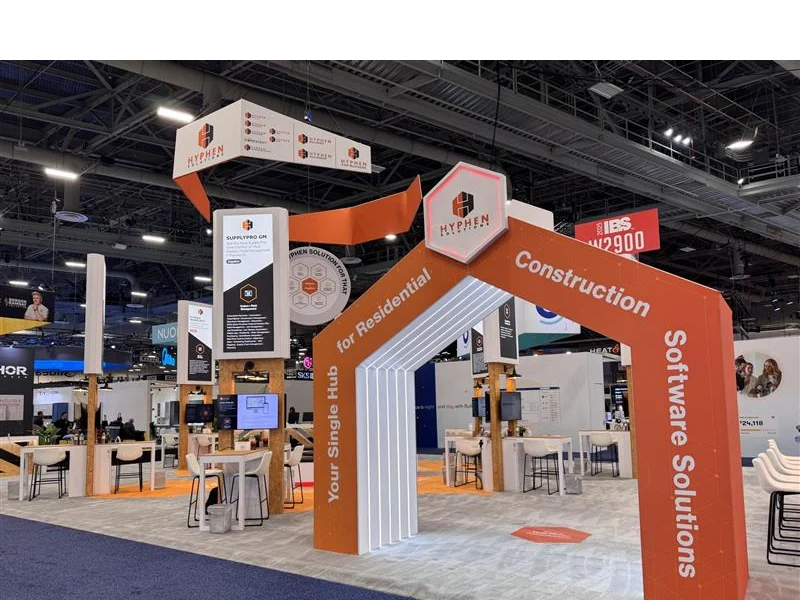
At IBS 2026, more than 1,000 conversations gave us a clear view into what Builders and Suppliers were thinking about as the year began. We shared those initial insights in What We Learned from 1,000 Builder and Supplier Conversations at IBS 2026. Since then, we have continued to watch those priorities evolve as the industry navigates affordability, changing buyer expectations, operational costs and a rapidly expanding conversation around AI.
In our recent follow-up, From IBS to Today: What 1,000 Industry Conversations Told Us About 2026, we revisited those themes and explored how they continued to shape the industry throughout the year. Now, as planning for 2027 gets underway, the question is what Builders and Suppliers should carry forward.
For us, the answer starts with getting the fundamentals right while being more deliberate about what comes next. That means removing friction from everyday operations, connecting the systems and partners behind every home, making it easier to convert buyers and investing in software, including AI, to deliver measurable value.
Here are five priorities we believe are worth carrying into 2027.
1. Efficiency Should Remain an Operational Priority
Efficiency was one of the strongest themes we heard at IBS, and it remains important heading into 2027. But efficiency does not simply mean asking people to work faster or accomplish more with fewer resources.
Efficiency starts with looking at how the work gets done across scheduling, purchasing, field management, financial processes, warranty, safety and communication. These are not new priorities for residential construction. They are the fundamentals that keep homes moving, and even small gaps in these processes can create larger problems.
Safety is a good example. New research commissioned by the Job-Site Safety Institute and reported by NAHB in September found that eight of the nine residential construction firms participating in site visits identified schedule pressure as the single most significant operational stressor affecting safety. The research also recommended building safety into project schedules and strengthening communication with subcontractors.
That is an important reminder as Builders think about the software and processes they will rely on in 2027. The fundamentals cannot become secondary simply because newer capabilities are getting more attention.
For a Builder, the question may be whether scheduling, purchasing, jobsite communication, inspections, safety and warranty processes are giving teams what they need to manage the work effectively. For a Supplier or Trade, it may be whether orders, schedules, field activity, billing and payments can move through the business without unnecessary manual steps.
Getting back to basics is really about making sure the operational foundation is strong enough to support what comes next.
2. Connected Workflows Matter More Than Adding More Software
One of the clearest lessons from our conversations this year is that the industry is not asking for another collection of disconnected tools.
Builders and Suppliers already have software, so the bigger question heading into 2027 is whether those systems work together.
That should become part of the evaluation process for any new software investment. Builders need to consider how easily a new solution can fit into the systems already running the business, whether information can move between construction management and the ERP or accounting environment without another manual process and whether teams can access the information they need without entering it again somewhere else.
Integration is not simply an IT consideration because the way systems connect directly affects the people using them and the work they do every day.
The same thinking applies within the Hyphen Solutions ecosystem. BuildPro connects construction management with products including BRIX, our cloud-based ERP, Hyphen HomeFront and SupplyPro GM. Together, these connections help information move across Builder operations and into the Supplier network, rather than treating each workflow as an isolated software decision.
For Builders evaluating their ERP and operational software in 2027, the goal does not necessarily need to be replacing everything they already use. A better approach is to consider whether the systems they choose can connect with the tools and workflows that already matter to their business.
The industry’s software conversation is beginning to reflect that thinking as well. Looking toward 2027, NAHB member Katye McGregor Bennett put it this way: “The biggest smart-home trend for 2027 isn’t simply more technology. It’s better-planned technology.” Her comment was made in the context of smart-home planning, but the underlying principle is worth considering more broadly: adding software is not the same thing as building a better-connected operation.
3. Builder-Supplier Connectivity Deserves Greater Attention
There is another piece of the connectivity conversation that can be easy to overlook: a Builder’s operation does not stop at the Builder’s four walls.
Every home depends on a much larger network of Suppliers, Manufacturers and Trades coordinating changing purchase orders and schedules, material deliveries, crew availability and the many other details required to keep construction moving. When those connections rely on emails, phone calls, separate portals and duplicate data entry, the friction does not stay on one side of the relationship.
This is one of the areas where our 1,000 conversations at IBS continue to shape how we think about 2027. Improving internal efficiency is important, but the next opportunity is to look at how information moves between the companies responsible for actually building the home.
It is also an area where Hyphen Solutions has spent decades building connectivity. BuildPro brings Builders together with their Suppliers, Manufacturers and Trades, while SupplyPro GM extends that connectivity into a Supplier or Trade’s own operations by connecting Builder jobs, orders and schedules with production scheduling, field activity, billing and accounting.
Looking at operational efficiency across the entire Builder-Supplier relationship can help both sides reduce the friction that comes from disconnected processes and information.
As Builders and Suppliers establish their 2027 priorities, it is worth considering whether the systems on both sides are making it easier to work together or simply creating more places for information to live.
4. Expect More from AI Than the Label
One of the more interesting changes during 2026 has been the evolution of the AI conversation.
At IBS, we heard repeatedly that Builders and Suppliers were less interested in whether software could claim to use AI than in whether it could make everyday work easier. As we head into 2027, that should remain the standard.
AI should not become another system employees have to check or another place where information has to be entered. Its value should come from making the operational foundation underneath it more useful by helping someone get to an answer faster, understand what needs attention, identify a problem earlier or spend less time searching across systems for information that already exists.
That focus on making existing information more useful is also central to Dash, the AI assistant from Hyphen Solutions, which works with information already moving through BuildPro, BRIX, SupplyPro GM and BuilderGM. Users can ask what changed, what needs attention or what is behind an issue, and Dash can bring forward the jobs, schedules, purchase orders, production activity and Builder or Supplier commitments behind the answer.
Useful AI in residential construction begins with the work itself, where digitized workflows create information, connected systems make that information more useful, and AI can then help people understand and act on it faster.
Heading into 2027, Builders and Suppliers should expect AI to do more than check a box on a software feature list. They should expect it to understand the context behind the work and help their teams make better use of the information they already have.
5. Make 2027 Investments Around the Problems You Need to Solve
Perhaps the most important lesson to carry forward is that software planning should begin with the problems the business needs to solve.
For Builders, identifying where the business needs to perform better begins well before construction starts, particularly as converting today’s buyer continues to require greater attention. According to the October 2026 NAHB/Wells Fargo Housing Market Index, 43% of Builders reported cutting prices, the highest share recorded between 2020 and 2026, with an average price reduction of 6%. Meanwhile, 65% were offering sales incentives, and prospective buyer traffic fell to its lowest level since April 2012, excluding the onset of the pandemic.
With buyer traffic under pressure, Builders need to make the most of every opportunity, including ensuring their Sales and Marketing teams have the tools and information to move prospects through the buying process effectively. Solutions like Hyphen CRM can help support that process by connecting lead management, prospect communications and Sales activity, giving teams greater visibility into the buyer journey.
Conversion is only one part of the equation because once the home is sold, the business still needs to schedule it, purchase for it, coordinate Suppliers and Trades, manage the field, maintain financial visibility, communicate with the homeowner and ultimately support the home after closing.
With that broader view in mind, Builders can look across the business to identify where teams are losing time, which processes remain manual, where visibility is limited, which systems are not connected and where better information could improve the buyer experience or help an employee make a faster decision.
For Builders working through those decisions, our 2027 Builder Budget Planning Checklist provides a framework for reviewing current software investments, identifying operational gaps and determining what should make the priority list for the year ahead.
Carry the Right Things Forward
If there is one idea connecting everything we heard at IBS and what we have watched unfold since, it is that being ready for what comes next does not require leaving the fundamentals behind.
For Builders and Suppliers, the opportunity in 2027 is to build on those fundamentals by improving everyday operations, strengthening the connections between systems and partners and making software investments that solve real business problems. That includes being more deliberate about where AI can deliver meaningful value rather than simply adding another capability to the list.
Our 1,000 conversations at IBS started with listening to what Builders and Suppliers needed most. Now, the opportunity is to turn those insights into practical decisions about where to improve, where to connect and where to invest next.
For Builders beginning that planning process, our 2027 Builder Budget Planning Checklist can help identify operational gaps, evaluate current software investments and determine what should make the priority list for the year ahead.
And as we prepare to return to IBS 2027 in Las Vegas, we look forward to continuing these conversations with Builders and Suppliers, hearing how their priorities are evolving and learning what comes next for the industry.